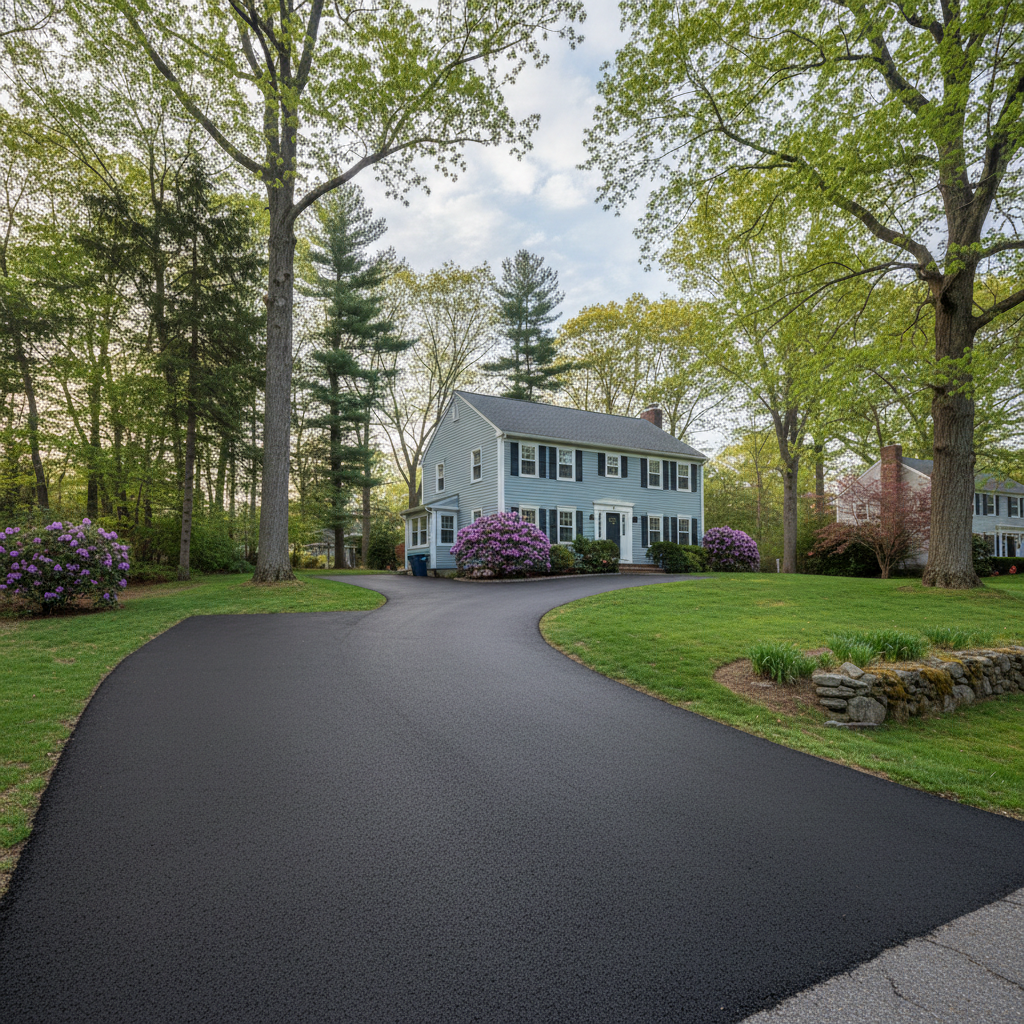
New England weather can be very hard on driveways. Homeowners in Waltham, Massachusetts already know that winter temperatures bring a relentless series of freeze-thaw cycles that can wreck a paved surface in just a few seasons. Water gets into tiny surface pores, turns to ice, expands, and leaves behind crumbling edges and widening cracks. Absolute Asphalt spends a lot of time fixing problems that could have been avoided with some basic, timely upkeep. If you want to get 15 to 20 years or more out of your driveway, you need an Asphalt Maintenance plan that matches our local climate.
What Regular Pavement Care Looks Like
Keeping a driveway healthy is not rocket science, but it does take consistency. You do not need to baby it every weekend, but you do need to pay attention when the seasons change. Keep debris, wet leaves, and pine needles cleared off the surface. Organic matter holds moisture against the asphalt, and when moisture sits, it softens the binder. Clean oil or fluid leaks immediately using a commercial degreaser and a stiff brush because gasoline and motor oil will dissolve the liquid asphalt binder if they are left to soak in.
- Wash down the surface a couple of times a year to clear out fine dirt from micro-cracks.
- Keep heavy commercial delivery trucks off your residential setup; standard passenger cars are what standard thickness is engineered to handle.
- Trim back overhanging tree branches so sunlight can hit the pavement and dry out morning frost or heavy rain faster.
Warning Signs You Shouldn't Ignore
Your driveway will usually tell you when it is hurting long before it completely falls apart. Hairline cracks are normal as the pavement ages and flexes, but once they start opening up past a quarter-inch wide, water has a direct pipeline down to your gravel base. If you notice alligator cracking—where the surface looks like a web of interconnected blocks—that means the sub-base underneath has failed and can no longer support weight. Depressions where water pools after a rainstorm are another red flag. Standing water means your sub-grade is settling unevenly, which happens all the time in Waltham's variable clay-heavy soils.
When to Call in a Professional
Some DIY weekend projects make sense, but structural pavement repairs are not usually one of them. If you have cracks spreading across major sections, or if chunks of asphalt are popping out near the edges of your garage apron, it is time to bring in a professional Asphalt Contractor. Applying a DIY jug of store-bought crack filler over a deep, active crack is just a temporary fix that will not survive a single January freeze. Absolute Asphalt handles structural patching, infrared repairs, and milling where the damage goes deeper than the surface layer. Catching these issues early keeps a localized repair from turning into a total repaving job down the road for homes in Waltham, MA.