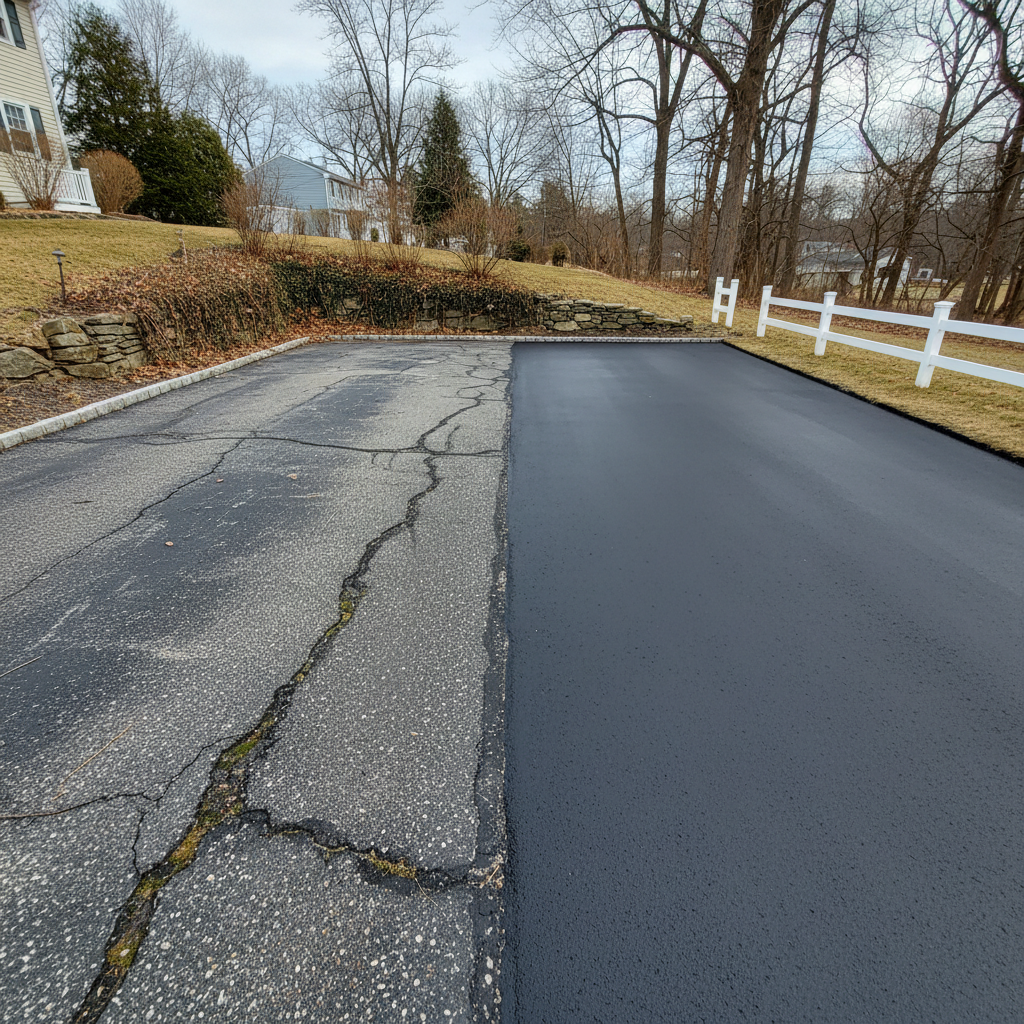
Alright, let's talk sealcoating. Maybe your asphalt driveway is looking a little faded, or you're just being proactive — good for you. But when you start looking into 'slurry coating' or 'sealcoating,' you'll quickly find there isn't just one magic bullet. There are two main types of asphalt emulsions used for sealcoats, and knowing the difference is key to getting the right protection for your Waltham home.
Refined Tar Emulsion (RTE) Sealcoating: The Traditional Workhorse
This is what most folks think of when they hear 'sealcoat.' Refined Tar Emulsion, or RTE, has been around forever, and for good reason. It's a tried-and-true product that does a fantastic job protecting asphalt surfaces.
Cost & Durability
Generally, RTE is going to be your more affordable option upfront. It's widely available, and the application process is pretty standard. When it comes to durability, RTE is tough. It's incredibly resistant to things like gasoline, oil, and other chemicals that can drip from your car. That's a big deal, because those spills eat away at your asphalt over time. It also stands up well to the freeze-thaw cycles we get here in Massachusetts – one day it's 50 degrees, the next it's 20, and that constant expansion and contraction can really beat up a driveway. A good RTE coat helps slow that down.
Maintenance & Appearance
RTE gives you that classic, deep black finish that makes a driveway look brand new. It really pops. As for maintenance, you'll typically want to reapply RTE every 2-3 years, depending on traffic and how harsh the weather has been. It's a pretty straightforward process, and if you keep up with it, your driveway will look great and last a long time.
Asphalt Emulsion (AE) Sealcoating: The Newer Kid on the Block
Then you've got Asphalt Emulsion, or AE. This type of sealcoat uses a different base material, asphalt, instead of refined tar. It's been gaining popularity, especially in areas with tighter environmental regulations, because it has a lower VOC (Volatile Organic Compound) content.
Cost & Durability
AE sealcoats tend to be a bit more expensive than RTE, both for the material itself and sometimes for the application, as it can be a bit more finicky to work with. In terms of durability, AE is good, but it's generally not as resistant to chemical spills as RTE. If you've got an older car that drips oil, or you're constantly working on engines in your driveway, you might see some breakdown in those spots sooner. It still offers good protection against water and UV rays, which are huge for extending the life of your asphalt.
Maintenance & Appearance
AE sealcoats also give you a nice dark finish, though some folks find it's not quite as deep and rich a black as RTE. It's a subtle difference, but it's there. Like RTE, you'll be looking at reapplying AE every 2-3 years. The key thing with AE is making sure it's applied in the right conditions. It needs specific temperatures to cure properly, and if it's too cold or too humid, you can run into issues with it not bonding right. We've seen that happen with some DIY jobs around the Belmont Street area when people try to rush it in the spring or fall.
So, Which One Should You Choose for Your Waltham Driveway?
Honestly, for most homeowners in Waltham, I still lean towards Refined Tar Emulsion (RTE). Here's why:
- Chemical Resistance: We all have cars, right? They leak. RTE handles oil and gas spills much better, meaning less damage to your driveway's surface.
- Proven Performance: It's been protecting driveways through New England winters for decades. You know exactly what you're getting.
- Cost-Effectiveness: While both are investments, RTE typically gives you the best bang for your buck in terms of protection versus upfront cost.
- Deep Black Finish: It just looks fantastic. It really enhances your home's curb appeal.
Now, if you're really concerned about VOCs, or if you have a brand new electric vehicle and absolutely zero chance of chemical spills, then AE is a perfectly fine option. But for the typical Waltham homeowner dealing with everything from snow plows to leaky old sedans, RTE is usually the smarter choice for long-term protection and value.
No matter which you choose, proper surface prep is non-negotiable. Cleaning, filling cracks, and making sure the surface is dry are critical for any sealcoat to adhere properly and do its job. Don't skimp on that. If you're not sure which way to go, or you want a pro to handle it, give us a call at Absolute Asphalt. We're happy to come out, take a look at your driveway, and give you an honest recommendation based on its condition and what you're looking for.