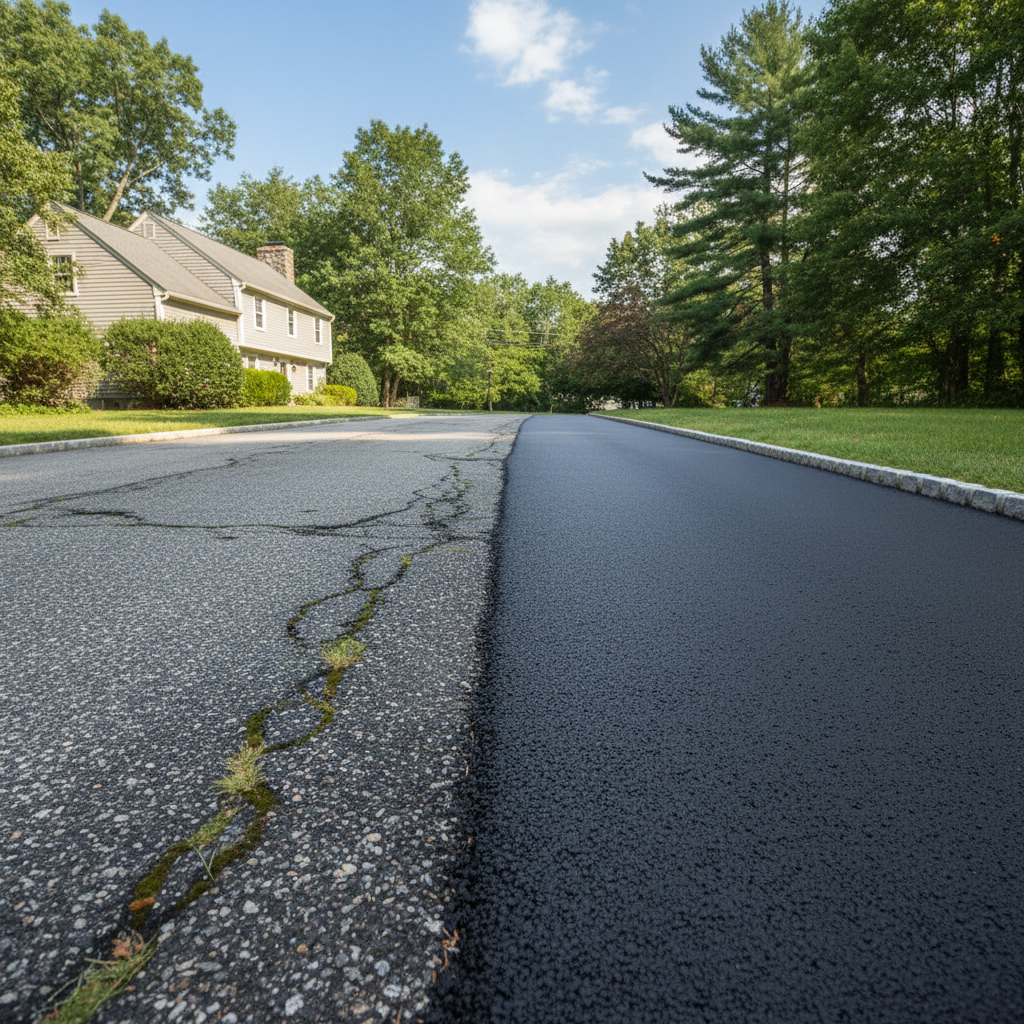
Got a big driveway, a private road, or maybe a shared access lane that needs some serious asphalt work? For homeowners in Waltham with larger-scale paving needs, you've generally got two main paths to consider: an asphalt overlay or a full-depth replacement. It's a big decision, and honestly, it's not always clear which one's right for your situation.
I've been doing this a long time around here, and I've seen both approaches done well and done poorly. Let's talk about what each one means for your property, your wallet, and how long it's going to last.
Asphalt Overlay: The Surface Fix
An overlay is exactly what it sounds like: we're putting a new layer of asphalt right on top of your existing pavement. Think of it like a fresh coat of paint, but for your driveway. We'll clean the surface, make sure any big cracks or potholes are patched up properly first, and then lay down a new layer, usually 1.5 to 2 inches thick, over everything.
Here's the deal with overlays:
- Cost: This is usually the cheaper option upfront. We use less material, and there's less labor involved because we're not tearing out the old stuff. If budget is your absolute top concern, an overlay will look mighty attractive.
- Durability: This is where things get tricky. An overlay will definitely make your pavement look great and smooth out minor imperfections. But it's only as good as what's underneath it. If your existing base is failing – meaning it's got significant structural cracks, heaving, or drainage issues – that new layer isn't going to magically fix those problems. Those issues will eventually show through the new surface. I've seen overlays on a bad base start cracking again within a couple of years, especially with our freeze-thaw cycles here in New England.
- Maintenance: Regular sealcoating every few years is still a good idea to protect that new surface. You'll also need to address any new cracks that form promptly.
- Appearance: For a while, it'll look fantastic. Smooth, dark, and brand new. It's a great aesthetic upgrade if the underlying structure is sound.
Full-Depth Replacement: The Complete Overhaul
Now, a full-depth replacement is a much more involved process. This means we're tearing out all the old asphalt, sometimes even digging down into the sub-base if it's compromised. We'll then rebuild from the ground up: compacting the sub-base, laying down a fresh layer of gravel or crushed stone for the base, and then paving with new asphalt, typically in two layers (a binder course and a surface course) for a total thickness of 3 to 5 inches, depending on traffic.
What you get with a full replacement:
- Cost: This is going to be more expensive, no two ways about it. More material, more labor, more equipment time. But you're paying for a completely new foundation.
- Durability: This is where full-depth truly shines. When done right, with a properly prepared and compacted base, a full-depth replacement will last significantly longer than an overlay – often 20 years or more with good maintenance. You're addressing any underlying issues that caused the old pavement to fail. You won't have old cracks coming back through.
- Maintenance: Just like an overlay, regular sealcoating and crack sealing are key to maximizing its lifespan. But because the foundation is so solid, you're usually dealing with fewer, less severe issues over time.
- Appearance: It looks perfect, because it is. And it stays looking great for a long, long time.
Which One Should You Choose for Your Waltham Property?
Honestly, for most commercial-style applications on a residential property – like a long driveway or a large parking area – I almost always recommend a full-depth replacement if your budget allows. Especially here in Waltham, where we deal with tough winters, heavy spring thaws, and sometimes rocky, clay-rich soil that can shift, a solid foundation is absolutely critical. We've seen plenty of old driveways in the Highlands and other older neighborhoods that are just crumbling because the original base wasn't up to snuff.
An overlay is a good option if:
- Your existing asphalt is in pretty good shape, with only minor surface cracking and no major structural failures, heaving, or drainage problems.
- You're on a very tight budget and need a cosmetic fix that will last a decent amount of time, understanding it's not a permanent solution.
Go for a full-depth replacement if:
- Your existing asphalt has widespread cracking, potholes, significant areas of settlement, or drainage issues.
- You want the longest-lasting, most durable solution possible.
- You're looking for the best return on your investment over the long term.
- You want to know the job was done right from the ground up.
When I'm out giving estimates, like for Absolute Asphalt, I'll always give you my honest assessment of what I see. Sometimes an overlay is perfectly fine, but often, especially with older, heavily used surfaces, trying to save a buck with an overlay ends up costing more in the long run when you have to redo it much sooner. Don't hesitate to give us a call, and we can take a look at your specific situation.