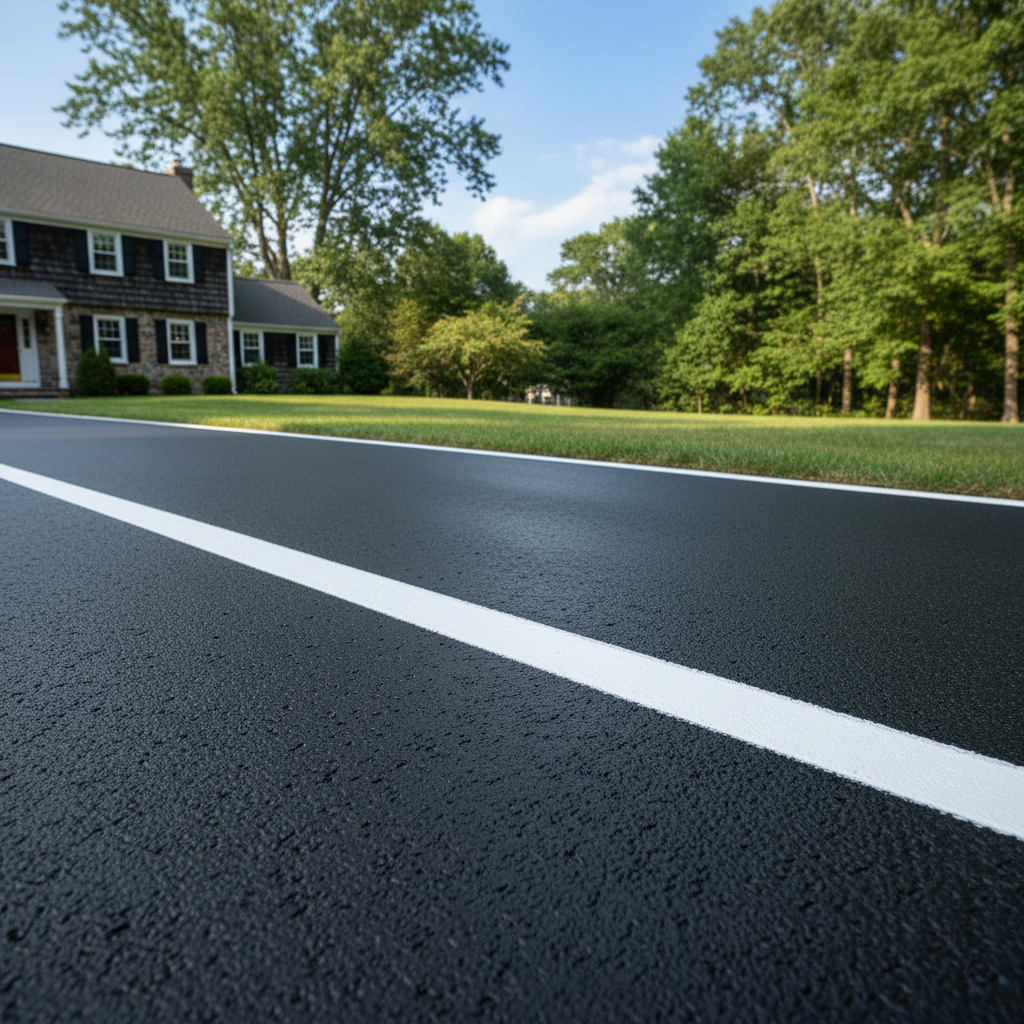
Alright, let's talk about striping. I get a lot of calls from folks here in Waltham—whether it's for their home driveway or a small business parking lot—and a few common questions always pop up. So, I figured, why not just lay out the answers right here? Plain and simple. No fluff, just what you need to know.
What's the difference between paint and thermoplastic for striping?
This is probably the question I hear most often. You've basically got two main choices for striping: paint or thermoplastic. Paint is what you typically see on smaller driveways or in areas that don't get a ton of traffic. It's pretty cost-effective, easy to put down, and, hey, it comes in a bunch of colors. The downside? It just doesn't last as long, especially with our crazy New England weather. Those harsh winters, with all the plowing and sanding, really beat up paint.
Thermoplastic, on the other hand, is a much tougher material. It's essentially a plastic powder that we heat until it turns liquid, then apply it to the pavement. Once it cools, it forms this thick, super reflective, and incredibly durable layer. It costs more upfront, sure, but it lasts way, way longer—sometimes five to ten times longer than regular paint. For a busy parking lot, especially one that sees a lot of snow removal action, thermoplastic is almost always the smarter investment. It just holds up better against all that constant wear and tear, you know?
How long does new striping take to dry before I can drive on it?
This really depends on the material. If we're using standard traffic paint, it's usually dry to the touch in about 15-30 minutes. But, honestly, you'll want to give it a good hour or two before driving on it, especially if it's a humid day or a bit chilly. Nobody wants to track wet paint all over their nice new asphalt or, even worse, into their garage. With thermoplastic, it cools and hardens almost instantly after we put it down. You can usually drive on it within minutes, which is a huge plus for businesses that can't afford long parking lot closures.
How often should I restripe my driveway or parking lot?
For a residential driveway, if you're using paint, you might find yourself needing a refresh every 1-3 years. That timeframe shifts based on traffic, sun exposure, and how much abuse it takes from snow shovels. For parking lots, especially commercial ones, it's a different ballgame. If you're using paint there, you're probably looking at restriping every 1-2 years to keep things looking sharp and compliant. But if you've invested in thermoplastic, you can often get 5-8 years, sometimes even more, out of it before needing a full reapplication. It really just comes down to the material, how much traffic it sees, and the local conditions—like all those freeze-thaw cycles we get here in Waltham.
Can you stripe over old, faded lines? Do they need to be removed?
Most of the time, we can stripe right over existing faded lines. If the old ones are still somewhat visible, we'll just use them as a guide. This is usually the easiest and most cost-effective way to go. However, if the old lines are totally gone, or if you're changing your parking lot's layout, then we might need to do a bit more work. Sometimes, if there's a huge buildup of old paint layers, or if the lines are in the wrong spot, we might suggest grinding them off. But for typical maintenance, a fresh coat right over the old ones usually does the trick and saves you money.
What kind of prep work is needed before striping?
Good prep work is absolutely crucial for a stripe that actually lasts. First off, the surface has to be clean and dry. We'll sweep off any loose dirt, gravel, or debris. If there are oil spots or other gunk, we'll clean those thoroughly because paint just won't stick well to grease. For brand-new asphalt, we usually wait a bit for the surface to cure properly before striping—typically 30 days, though sometimes longer depending on the mix. If it's a parking lot that's just been sealed, we'll wait for the sealcoat to fully cure, which can take 24-48 hours. Proper adhesion is everything when it comes to striping, and that all starts with a clean, dry surface.
Does the weather affect striping? What's the best time of year?
Oh, weather plays a huge role, absolutely. You obviously can't stripe in the rain; the surface needs to be dry. Temperature matters too. Most paints and thermoplastics have specific temperature ranges for the best application, usually above 40-50 degrees Fahrenheit. If it's too cold, the materials won't cure right or stick as well. If it's too hot, some materials can dry too fast or become a pain to work with. That's why spring, summer, and early fall are generally the best times for striping here in Waltham. Once those late autumn nights start dipping below freezing, things get tricky. We've really got to watch out for those cold snaps, especially in neighborhoods like the Highlands where the shade can keep pavement cooler longer.
How does Absolute Asphalt ensure my parking lot layout is compliant with ADA standards?
When it comes to commercial parking lots, ADA compliance isn't just a suggestion—it's the law. You can face some pretty hefty fines if you're not up to snuff. When we're laying out or restriping a commercial lot, we make sure everything meets the current ADA guidelines. That means checking the number of accessible spaces, their size, access aisles, and proper signage. We'll review your existing layout or help you design a new one that ensures you're providing safe, accessible parking for everyone. It's not just about putting down lines; it's about making sure your property is safe, functional, and legally compliant. We take that seriously.
Can striping help with traffic flow and safety in my parking lot?
Definitely. Good striping is about more than just marking spaces, you know? It's a critical tool for managing traffic flow, making things safer, and getting the most out of your parking area. Clear directional arrows, stop bars, crosswalks, and designated pedestrian pathways all work together to guide drivers and pedestrians safely. Without clear lines, you end up with confusion, bottlenecks, and a higher risk of accidents. For businesses, well-defined parking spaces mean more cars can fit efficiently, and customers have an easier, safer experience. It’s an investment that really pays off in both safety and customer satisfaction.